

Did you know that severe convective storms accounted for nearly half of all global insured natural catastrophe losses in 2025, totaling $60 billion? As weather patterns become more volatile, the gap between a successful settlement and a total denial often comes down to the quality of your records. Learning how to document storm damage for insurance is the most critical step you can take after the clouds clear. You need a system that removes doubt and forces an adjuster to see the facts as they are.
It's natural to feel anxious about the high cost of roof repairs or solar system restoration, especially when insurers are tightening their requirements and increasing deductibles. You deserve to know that your property is protected by more than just a policy. We promise to show you the exact, step-by-step process for building an undeniable evidence folder that ensures your claim is fully funded. We will walk through identifying specific storm markers, satisfying date of loss requirements, and securing your interior and solar investments against future disputes.
Key Takeaways
- Establish a clear 'Date of Loss' within 24 hours using local weather reports to prevent insurers from claiming damage is pre-existing wear and tear.
- Learn how to document storm damage for insurance by using scale markers like coins or rulers in photos to prove the severity of hail and wind impact.
- Protect your solar investment by checking energy monitoring apps for production drops and inspecting panels for hidden micro-cracks invisible to the naked eye.
- Build a dispute-proof digital evidence vault that includes a detailed communication log of every phone call and email with your insurance carrier.
- Leverage a professional 'Scope of Work' from a restoration expert to provide the technical authority needed to secure a fully funded settlement.
Immediate Steps: What to Do in the First 24 Hours After a Storm
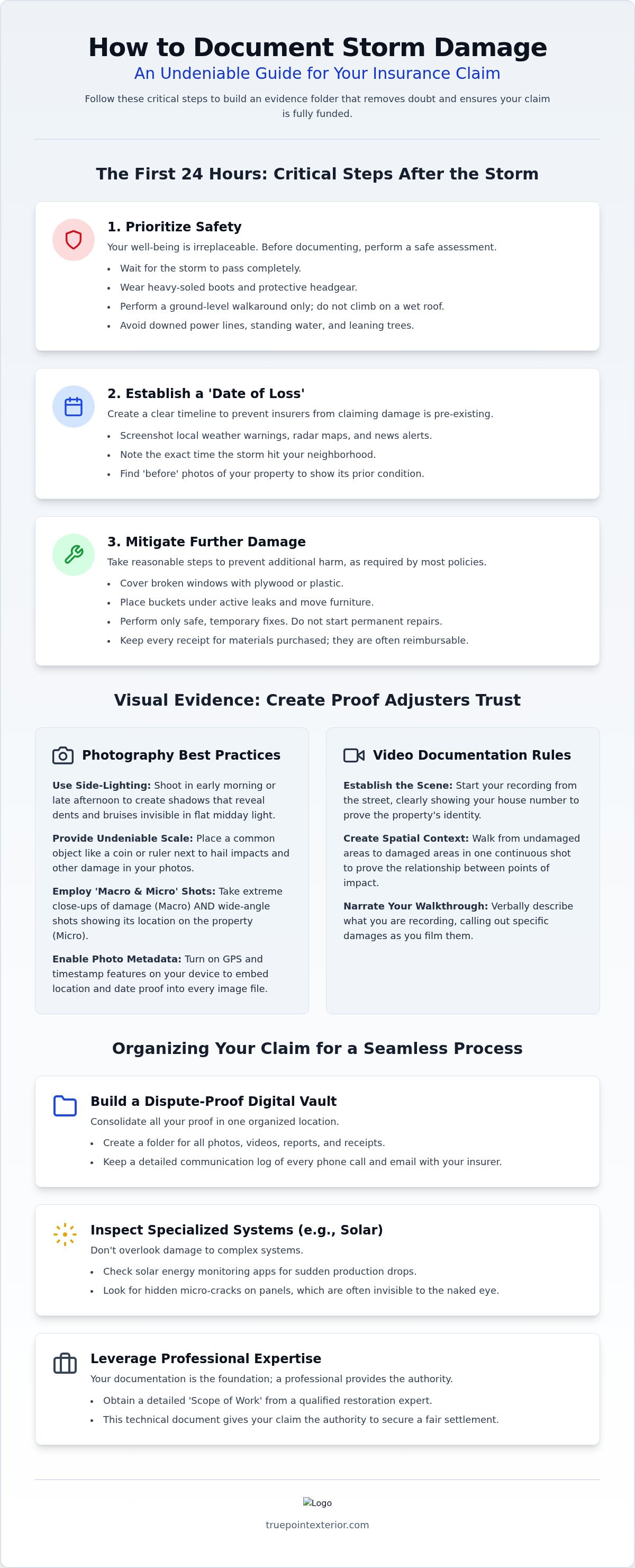
The first 24 hours after a severe weather event are critical for protecting your property and your future claim. Your priority is safety; the financial recovery process follows only once the immediate danger has passed. Storms often leave behind structural instability that isn't visible at first glance. Avoid downed power lines, standing water, and leaning trees. When you begin this process, you are essentially following the rules of evidence by collecting physical proof that demonstrates exactly what occurred. This documentation creates a factual foundation that adjusters cannot easily dismiss.
Safety Procedures for Storm Assessment
Wait for the storm to pass completely before heading outside. Wear heavy-soled boots and headgear to protect yourself from shattered glass, nails, or falling debris. Perform a ground-level walkaround of your home's perimeter to identify immediate hazards. Don't climb a ladder to check the roof or solar panels yourself. Wet surfaces and compromised shingles are high-risk areas that require professional equipment. If you notice a gas smell or see sparks from electrical boxes, evacuate the area and call emergency services immediately. Your physical well-being is the only thing insurance cannot replace.
Establishing Your Timeline
Insurance companies rely heavily on the 'Date of Loss' to verify that the damage matches specific weather patterns. Understanding how to document storm damage for insurance starts with establishing a clear timeline before any cleanup begins. Use your smartphone to take screenshots of local weather warnings, radar maps, and news alerts that mention your specific neighborhood. These digital records act as a third-party verification of the event's severity. Note the exact time the storm hit and, if possible, find 'before' photos from recent maintenance or social media posts to show the property's condition prior to the event.
Mitigating Further Damage
Most insurance policies require homeowners to take reasonable steps to prevent additional damage after a loss. This is known as damage mitigation. If a window is shattered, cover it with plywood or heavy plastic. If you have an active leak, place buckets underneath and move furniture to a dry area. Only perform temporary fixes that are safe and necessary. Keep every receipt for materials you purchase, as these are typically reimbursable. Don't attempt permanent repairs or throw away damaged materials yet; the insurance adjuster needs to see the original state of the destruction to calculate your settlement accurately.
Visual Evidence: How to Take Photos and Videos Adjusters Trust
Capturing visual proof is the most critical phase of your recovery. Most homeowners take blurry, context-free photos that adjusters easily dismiss as "wear and tear." To secure a full settlement, you must master how to document storm damage for insurance through professional-grade visual storytelling. This process isn't just about quantity; it's about clarity, scale, and environmental context. Your goal is to create a digital record that leaves no room for interpretation.
Timing your photography is just as important as the equipment you use. Utilize "side-lighting" by taking photos during the early morning or late afternoon. At these angles, the low sun casts shadows into shingle bruising and metal siding dents that flat, midday light completely washes out. Additionally, never photograph hail or impact marks in isolation. Always place a common object, such as a quarter or a ruler, next to the damage. This provides the adjuster with an immediate, undeniable sense of scale for the impact points.
The 'Macro and Micro' Photo Strategy
Effective documentation requires a two-tiered approach to every piece of evidence. This ensures the adjuster understands both the severity of the damage and its exact location on your property. Use the following checklist for every damaged area:
- Macro Shots: Capture extreme close-ups of specific dents in siding, shingle granules in gutters, or cracks in solar glass.
- Micro Shots: Take wide-angle photos showing the damaged section in relation to the entire house or roofline.
- Metadata: Ensure your camera's GPS and Time-Stamp features are enabled to prove the location and date of every image.
Video Documentation Best Practices
Video provides a spatial continuity that still photos cannot replicate. Start your recording from the street, clearly showing your house number to establish the property's identity. Walk toward the damaged areas in one continuous shot to prove the relationship between different points of impact. Narrate the video clearly by describing what you see, such as "I am looking at a 2-inch dent on the south-facing siding," but avoid speculating on repair costs or the cause of the damage. Capture the sound of wind-driven rattling or active drips to provide an immersive record of the loss.
If the damage is extensive, a professional storm damage repair advocate can help identify subtle technical issues that a standard smartphone camera might miss. This expert oversight ensures your visual evidence folder is comprehensive and technically sound before you submit it to your carrier.
Documenting Solar Panels and Interior Systems
Storm damage isn't always visible from the driveway. High-value assets like solar arrays and interior structural components require a specialized approach to verification. If you have a residential solar system, simply taking photos of the glass isn't enough. You must understand how to document storm damage for insurance by leveraging both digital performance data and physical inspections. This dual-layered evidence proves that the storm impacted the system's functionality, not just its appearance.
Assessing Solar System Health
Begin by opening your solar monitoring application. Look for immediate, sharp drops in energy production that coincide with the date of the storm. These production logs are high-trust data points for adjusters because they provide an objective record of system failure. If your inverter display shows new error codes, photograph them immediately. Wind-driven rain and vibration can also displace racking or loosen wiring. While you should avoid climbing the roof, you can often spot these issues from a safe distance or by using a zoom lens. Look for panels that appear slightly tilted or out of alignment with the rest of the array.
- Check for Micro-cracks: Hail impact often creates internal fractures in silicon cells that are invisible in direct sunlight. View the panels at an angle during the late afternoon to spot these spider-web patterns.
- Review Historical Data: Compare your current weekly output to the same week from the previous year. A significant discrepancy under similar weather conditions suggests internal cell damage.
- Inspect Racking: Look for "chatter marks" or shifted components where the system meets the roof line.
Tracing Interior Damage to Exterior Sources
Water damage often travels through the building's skeleton before it ever stains a ceiling. Head to the attic with a high-lumen flashlight. Inspect the underside of the roof deck for damp spots, dark streaks, or dripping insulation. These "hidden" leaks are the primary cause of long-term structural rot and mold. Documenting these early signs is essential for a successful claim. If water has already reached your living space, document every symptom from floor to ceiling. This includes warped hardwood, peeling paint, or bubbling wallpaper. Map these interior leaks to their corresponding location on the exterior roof to prove the path of the water.
Don't forget to document personal property. If a leak ruined electronics or furniture, include these items in your evidence folder. If you have access to a moisture meter, use it to prove saturation levels behind drywall that looks dry to the naked eye. This technical data provides the undeniable evidence needed for your documentation strategy. By connecting interior failures directly to the storm event, you eliminate the insurance company's ability to claim the damage was caused by a lack of maintenance or old age.
Organizing Your Evidence Vault for a Seamless Claim
Evidence is only as effective as your ability to present it. A chaotic pile of photos and loose notes allows adjusters to overlook critical details. By building a structured evidence vault, you transform your observations into a professional case file. This level of organization demonstrates that you understand how to document storm damage for insurance with precision. It signals to the insurance company that you are prepared for a thorough review and will not accept an incomplete settlement.
The Digital Claims Folder Structure
Cloud storage is your best tool for data security. Create a dedicated folder in Google Drive or Dropbox immediately after the storm. This ensures your evidence is accessible from any device and protected from local hardware failure. Organize your files into logical subfolders to make the review process frictionless:
- Exterior: High-resolution photos and videos of the roof, siding, and perimeter.
- Interior: Documentation of attic leaks, ceiling stains, and personal property damage.
- Solar: Performance logs, error codes, and racking inspection photos.
- Reports: Professional contractor estimates and official adjuster summaries.
Name every file using a consistent format, such as "2026-09-15-South-Roof-Hail-Impact." This prevents confusion during the review and makes specific evidence easy to locate during a phone call with your carrier. Clear organization prevents the "lack of evidence" denials that plague unorganized claims.
Managing the Paper Trail
Verbal agreements have no weight in an insurance claim. You must document every interaction with your insurance company to maintain a clear history of the case. Ask for the name and employee ID number of every representative you speak with. Immediately after hanging up, write a single-sentence summary of the conversation in a digital log. Note the date, time, and any instructions or promises made by the adjuster. This log creates a chronological narrative that is difficult for a carrier to dispute later.
Always request denials or partial approvals in writing via email. If an adjuster claims a specific repair is not covered, ask them to cite the exact section of your policy. Keep a digital copy of your current insurance policy's Declarations Page at the top of your folder. This page lists your coverage limits and deductibles, serving as your primary reference for what the insurer owes you. Save every receipt for emergency repairs, such as tarps or plywood, as well as temporary lodging if the storm made your home uninhabitable.
If you feel overwhelmed by the technical requirements of the claims process, professional insurance claims assistance can take the logistical burden off your shoulders. We act as your advocate to ensure your evidence vault meets every industry standard for approval.
Professional Advocacy: Why Documentation is Only the Beginning
Your evidence vault is a powerful tool, but it's only the first step in a complex recovery process. While homeowner notes establish the timeline, a professional "Scope of Work" provides the technical weight required for a major claim. Insurance companies often view homeowner documentation as subjective. By contrast, a detailed report from a restoration expert uses industry-standard language and line-item estimates that adjusters must address. This transition from personal observation to technical advocacy is where the real work of securing a settlement begins.
The Power of a Joint Inspection
A joint inspection is the most effective way to ensure nothing is overlooked. You should always have your contractor present when the insurance adjuster arrives at your property. Restoration pros are trained to spot hidden storm damage, such as thermal seal failure or micro-fractures in solar panels, that a standard adjuster walkthrough might miss. When you know how to document storm damage for insurance, you provide the starting point, but a professional advocate ensures that data is used to challenge low-ball offers on the spot. This collaborative approach forces the insurance company to justify any discrepancies between their assessment and our findings.
Your Path to Full Restoration
True Point Exterior takes the documentation you've gathered and builds a comprehensive strategy for your home's recovery. We specialize in navigating the friction between insurance carriers and homeowners in states like PA, TX, CT, RI, and NJ. Our team integrates technical solar system repairs directly into your primary insurance claim. This ensures your clean energy investment isn't left out of the settlement. We move beyond simple documentation to provide end-to-end solutions, from structural storm damage repair to professional interior remodeling for leak-damaged rooms. This proactive partnership eliminates the stress of the claims process and guarantees your home is restored to its pre-storm condition.
Don't leave your recovery to chance. A high-quality evidence vault deserves a high-quality advocate to see it through to the end. Schedule your professional storm damage assessment with True Point Exterior today to ensure your property is fully protected and your claim is handled with precision.
Secure Your Home's Future Recovery
A successful insurance claim is built on more than just luck; it's the result of disciplined documentation and professional technical support. By establishing a clear timeline and maintaining a structured digital evidence vault, you remove the ambiguity that carriers often use to deny or underfund claims. Mastering how to document storm damage for insurance ensures you are prepared to defend your property's value, from the roof shingles to the complex solar arrays powering your home.
True Point Exterior provides expert insurance claims assistance and specialized solar system support across PA, TX, CT, RI, and NJ. We act as your reliable advocate, transforming your initial documentation into a comprehensive scope of work that adjusters cannot ignore. Our team handles the logistical burdens so you can focus on returning your home to its pre-storm condition. Get a Professional Storm Damage Inspection & Claims Advocacy to ensure your property receives the full funding it deserves. You've done the hard work of capturing the evidence; now let us lead the fight for your restoration. Your peace of mind is our priority.
Frequently Asked Questions
How long do I have to report storm damage to my insurance company?
You should report storm damage as soon as it is safe to do so. In Texas, insurance companies must acknowledge your claim within 15 business days of receiving notice. Other states like Pennsylvania, Connecticut, Rhode Island, and New Jersey have their own specific statutes of limitations, often ranging from one to two years. Prompt action ensures that the damage is clearly linked to the specific storm event and prevents the insurer from claiming the loss is due to neglect.
Can I clean up the debris before the insurance adjuster arrives?
You can perform temporary repairs and remove hazardous debris to prevent further loss, but don't dispose of damaged materials until the adjuster inspects them. Take high-resolution photos of every item before moving it. Keep all receipts for plywood, tarps, or cleaning supplies used for mitigation. If you throw away evidence before it is documented, the insurer may refuse to pay for those items. Focus on safety first by clearing walkways and covering broken windows.
What if I find more damage after the insurance claim is already closed?
You can file a supplemental claim if additional damage is discovered after the initial settlement. This is common with hidden structural issues or solar system failures that manifest weeks later. Provide your carrier with new photos and a professional assessment from a restoration expert. Reopening a claim is a standard procedure when initial inspections were incomplete. State-level deadlines vary, so consult your policy to confirm the timeframe for submitting supplemental evidence for the same event.
Does insurance cover hail damage to solar panels?
Standard homeowner insurance policies typically cover solar panels under the dwelling or "other structures" portion of the coverage. This includes protection against hail, wind, and falling debris. Because solar arrays are high-value assets, you must understand how to document storm damage for insurance by checking your monitoring app for production drops. Professional verification of micro-cracks is often necessary to prove that the panels are no longer performing at their pre-storm capacity.
Should I file a claim if the damage seems minor?
You should evaluate the repair cost against your deductible before filing, but remember that "minor" roof or solar damage often leads to structural rot. A small leak in the attic can cause thousands in interior damage over time. If the estimated repair is significantly higher than your deductible, filing a claim is a prudent financial decision. Consult with a residential restoration specialist to get an accurate scope of work before contacting your insurance carrier for an official inspection.
What happens if the insurance company denies my storm damage claim?
If your claim is denied, you have the right to request a formal letter citing the specific policy language used for the rejection. You can then request a re-inspection or hire a professional advocate to represent your interests. Many denials stem from a "lack of evidence," which is why thorough documentation is vital. Providing a professional contractor's report often forces the insurer to reconsider their position and acknowledge damages their adjuster initially overlooked during the first walkthrough.
Do I need to get multiple estimates for my storm damage repair?
You aren't legally required to provide multiple estimates, although some insurers may request them. It's more important to have one comprehensive, technical estimate from a contractor who specializes in insurance restoration. True Point Exterior provides detailed documentation that aligns with insurance industry standards. A single, accurate scope of work that accounts for local building codes and solar technicalities carries more weight than three low-ball bids from non-specialized contractors who don't understand the claims process.
How do I document interior leaks if I can't see the roof damage?
You can document interior leaks by photographing water stains, bubbling paint, or warped flooring. Head into the attic with a high-lumen flashlight to capture photos of damp insulation or water trails on the rafters. These visuals prove that the roof has been compromised even if you can't safely access the exterior. Learning how to document storm damage for insurance from the inside is a critical skill for homeowners during active weather events when outdoor inspections are impossible.


